
More Empathy Please
Why humanist cinema is needed now, more than ever


I’ll come right out and say it, even though it sounds incredibly cheesy and many of you will surely roll your eyes… I’ve always believed cinema can change the world.
That’s the number one reason I wanted to become a filmmaker in the first place.
As a kid, nothing affected me the way movies did (well except music, but I don’t have much rhythm and can’t hold a tune, so there went that option). What I loved most about movies was their ability to transport me into somebody else’s experience. For two hours I could feel what they felt, the joy, the suspense, the sorrow, or the loneliness. I experienced my first heartbreak before I ever even had a boyfriend and I’ve felt the shame and guilt of committing crimes I had thankfully have never committed.
Through cinema, I was able to step into lives far different from my own (maybe your eye roll just happened now). I met people whose experiences, backgrounds, and struggles were nothing like my own, yet I found pieces of myself in them anyway.
The films that changed me most weren't simply interested in observing people from a distance, they wanted to understand them. They weren’t just concerned with how people live, but with who they are. When I look back at the films that have shaped me the most, that humanistic perspective is the common thread running through all of them.
As, Roger Ebert famously stated “ the movies are like a machine that generates empathy”. That is where cinema’s power lives, and this happens most effectively through humanist cinema, which is sadly a form of cinema that is lacking these days, especially in American Cinema.
So, What Is Humanist Cinema?
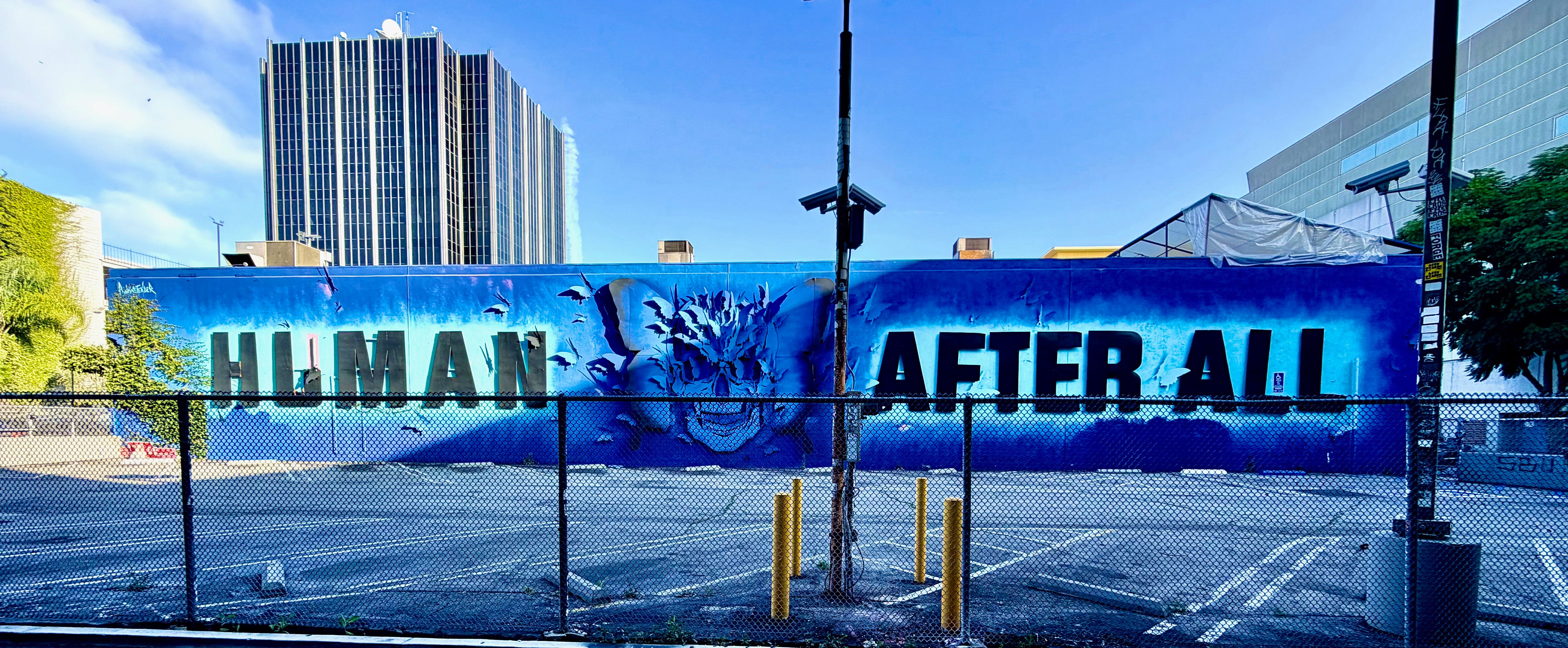
Humanist cinema is cinema that centers around the dignity, complexity, and emotional lives of ordinary people. It is more interested in understanding people rather than categorizing them, therefore it approaches its characters with curiosity not judgment.
Humanist films ask questions like: What does it feel like to be this person? What are they carrying around that nobody else can see? How do they find meaning, connection, dignity, or purpose? How do they make sense of the world?
The defining characteristic isn’t realism necessarily, or a particular style… it’s empathy. Though, people often hear the term and immediately think of small independent dramas about working-class families, humanism is actually much bigger than that, because humanism isn’t a genre. It’s a way of looking at people and a commitment to treating characters as fully realized human beings rather than symbols, stereotypes, or devices designed simply to move a plot forward… and that’s what makes it so powerful.
Because if humanism can exist in any genre, it can reach audiences through almost any kind of story. A fantasy can deepen our empathy. A science fiction film can help us reflect on grief (yes I’m looking at you Courtney Romano) or loneliness. A comedy can help us recognize ourselves in people we might otherwise dismiss. Humanism can travel anywhere stories and audiences go.
In fact many of the most beloved mainstream films endure precisely because they’re humanist. People might initially go see a film because of plot elements like the spaceships in Arrival, the zombies in Train to Busan, the shark in Jaws, or the dinosaurs in Jurassic Park. Yet long after the spectacle fades, what lingers are the people: a mother choosing love despite grief, a father sacrificing himself for his child, a man finding the courage to face what terrifies him, or someone confronting the consequences of their own ambition.
The genre gets audiences in the door, but the humanity is what impacts them and it’s what lasts decades later.
Humanism Meets Social Realism
Humanism often overlaps with social realism. Social realism, as most of you probably already know, is primarily concerned with how social, political, and economic forces shape people’s lives. These films often focus on working-class communities, poverty, institutions, inequality, and the everyday realities of living within larger systems.
When you add in humanism (which they often do overlap), these films ask a slightly different set of questions. While social realism might ask: why is this person struggling? Humanism would ask: who is this person? The strongest films in my opinion do both.
They help us understand the systems people live within while never losing sight of the individual human being at the center of the story. To me, that’s where what Taylor Lewis, myself, and others have been discussing as Modern Social Realism lives. It’s not just about depicting reality, it’s about understanding the emotional lives of people living inside that reality. It’s about both the circumstances and the internal feelings, or more so the circumstances through the internal feelings.
Many of my favorite filmmakers occupy this humanist space; Andrea Arnold, Sean Baker, Mike Leigh, and Hirokazu Kore-eda. What connects them isn’t style, nationality, or even subject matter, it’s that they all begin their films with a person, not an issue.

Andrea Arnold’s films all operate primarily through observation and emotional truth. Her characters are often angry, impulsive, difficult, and deeply flawed. She never asks us to like them, she just to understand them.
Her recent film Bird follows twelve-year-old Bailey, who lives in a chaotic working-class environment with her father Bug and brother Hunter. Poverty, instability, and neglect surround her, but Arnold refuses to define Bailey by those conditions. Instead, she focuses on Bailey’s imagination and her curiosity…Bailey is often noticing and observing the natural world, the animals, birds, insects, horses, etc., while everyone around her is focused on survival. The film is showing us what survives in us despite poverty, not how poverty damages us.
Even Bug, Bailey’s father, is treated with compassion. On paper he sounds like a terrible parent. He’s immature, impulsive, irresponsible, and constantly chasing some new scheme. Yet Arnold never reduces him to just that, she allows us to see his failures and his deep love at the same time, making him incredibly relatable to any parent.
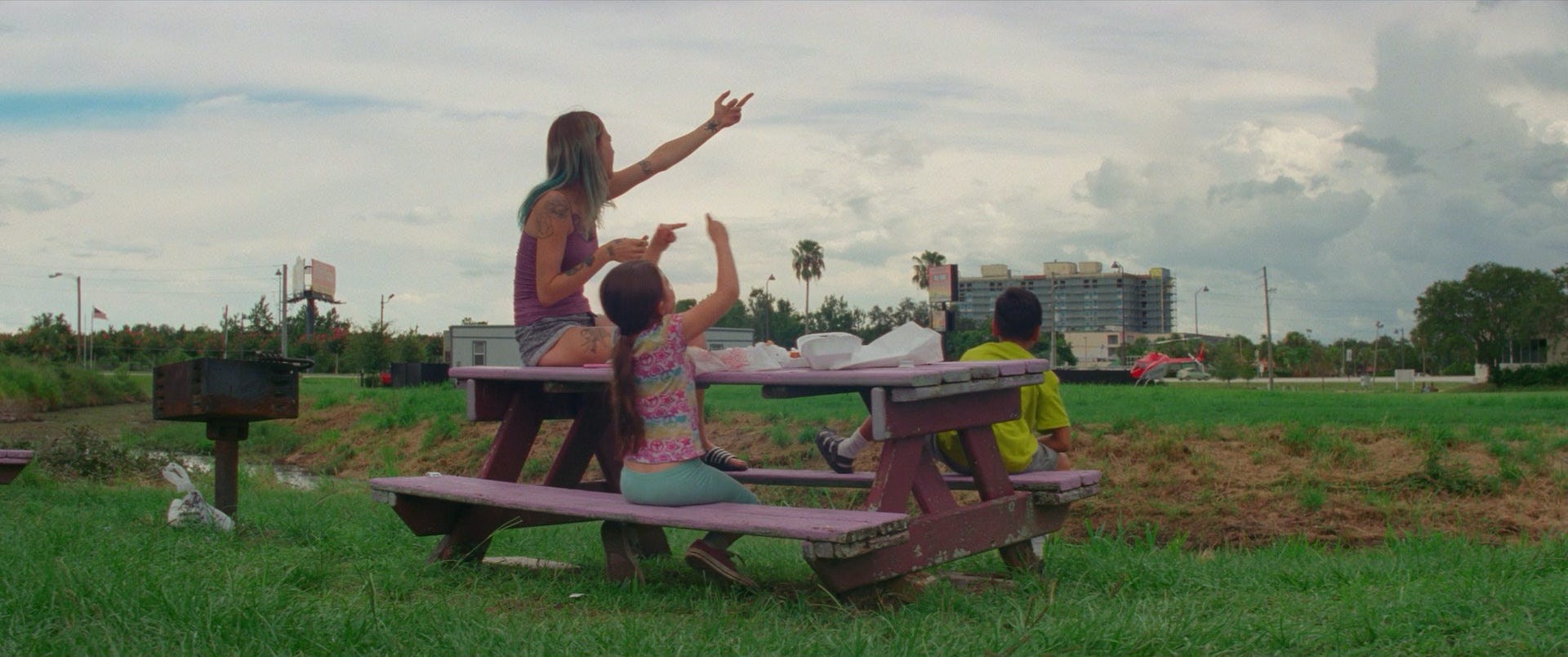
Sean Baker is another example of a humanist filmmaker. His films consistently focus on people mainstream cinema often overlooks, such as sex workers, undocumented immigrants, motel residents, and people living on society’s margins.
In The Florida Project, Baker chooses to tell the story through the perspective of six-year-old Moonee. This is an important choice because all the adults in the film understand they are living in poverty, but Moonee doesn’t. To her, the abandoned buildings become castles, empty lots become adventures, and therefore the world remains full of possibility. That is what makes the film so moving is that Baker allows joy and hardship to coexist. Poverty is present, but it doesn’t erase imagination, friendship, or play. The film asks us to see its characters, not to pity them.
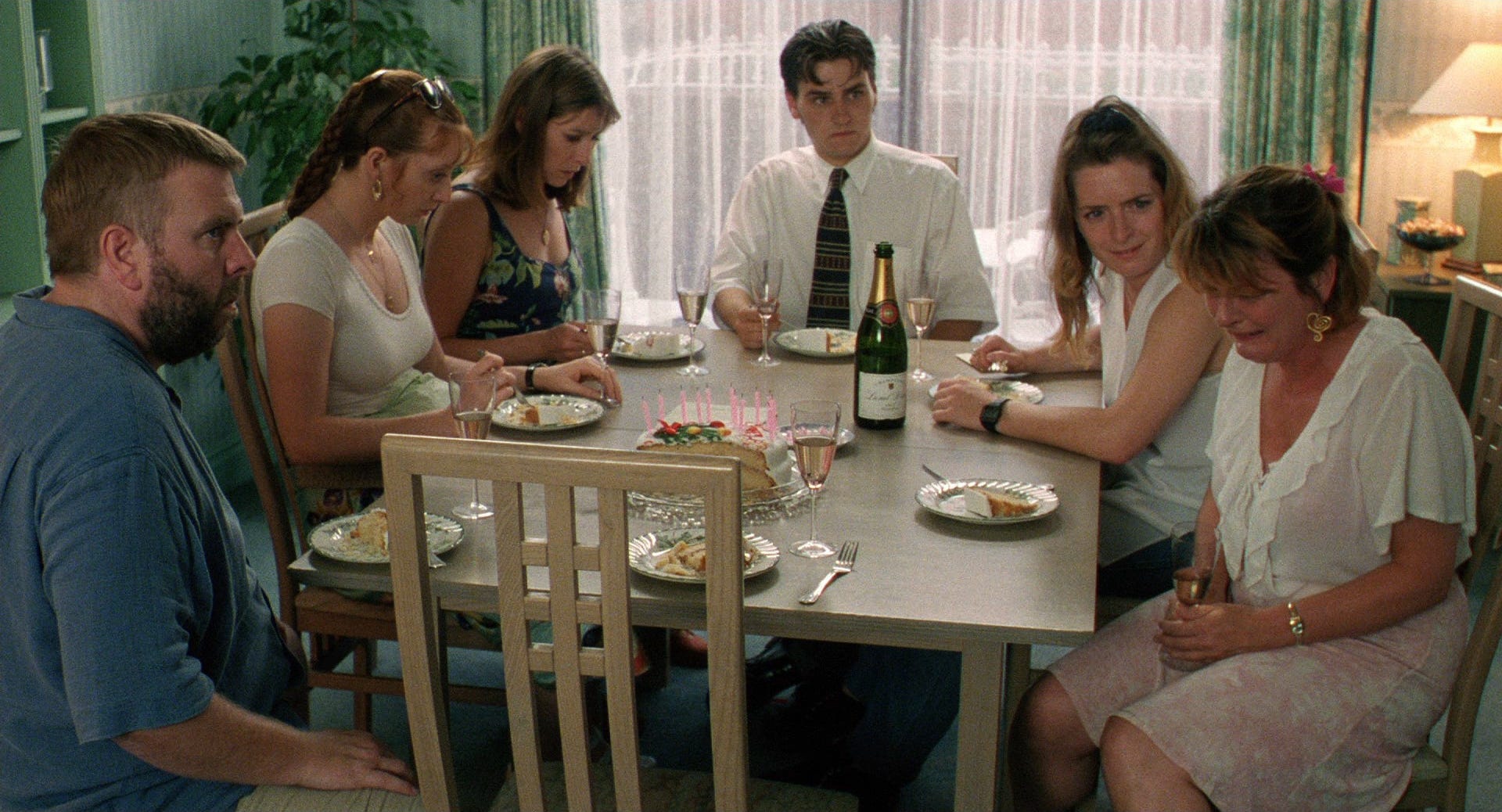
Mike Leigh might be cinema’s greatest observer of ordinary people. His gift is making us empathize with characters we may initially judge. Take Mary in Another Year, she drinks too much, talks too much, and desperately wants to be loved. A different filmmaker might make her a joke, but Leigh reveals the loneliness underneath the behavior, and by the end of the film, many viewers find themselves feeling compassion for someone they initially wanted to dismiss.
That’s humanism, it’s not forcing you to like someone, but it wants you to understand them.
Even in Secrets & Lies, where family resentments explode into one of the greatest dinner table scenes ever filmed, Leigh refuses to divide people into heroes and villains. Everyone is wounded and everyone is trying, however imperfectly, to survive emotionally.
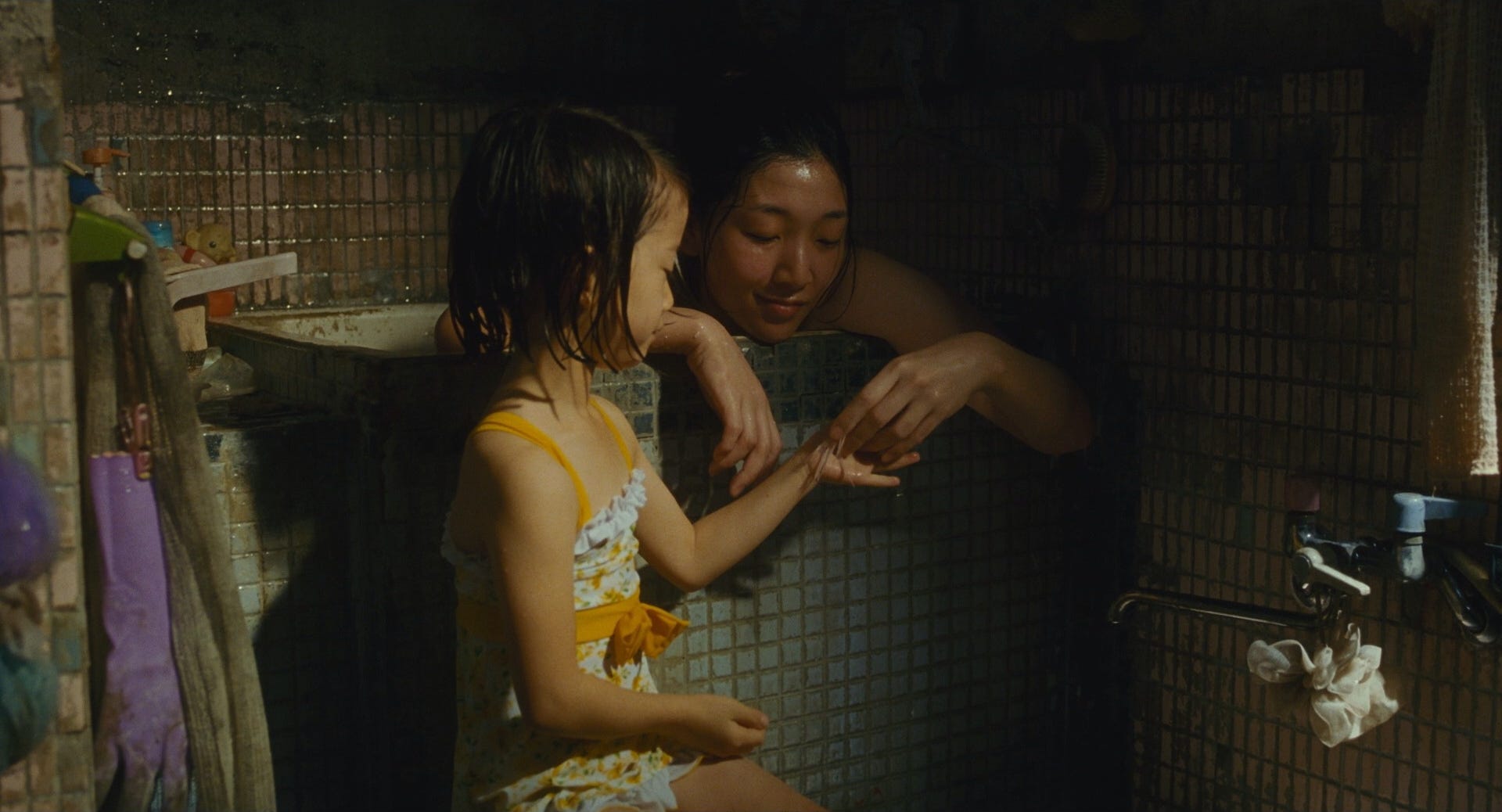
And then there’s Hirokazu Kore-eda, one of my personal favorites.
Many of his films seem to ask the same question: what makes a family? In Shoplifters, it’s a group of unrelated people that form a makeshift family on the margins of society… legally, they’re criminals, but emotionally, they’re more caring and connected than many traditional families.
The brilliance of the film is that Kore-eda refuses easy answers. When authorities intervene, he forces us to wrestle with some uncomfortable questions…like is legality the same thing as morality? Is biology the same thing as love? Who gets to define family? The film doesn’t give us the answer or tell us what to think, it just asks us to see everyone involved more clearly.
With all these films, it is only after we care about the people, that the larger social questions emerge. The beauty of all of them is that they never stop being about the people, and that’s what makes them so powerful, and so relatable even when the circumstances are far different from your own.

Why Humanism Matters So Much Right Now
And that brings me to why I think humanist cinema matters so much right now:
Because we are living in a time that actively works against humanism.
Every day we open our phones and get sucked into systems designed to capture and monetize our attention. The platforms shaping our understanding of the world, are ones that reward outrage, certainty, conflict, speed, and reaction. They do not reward understanding, after all anger and fear travel faster than nuance and empathy. And of course simple narratives are easier to sell than complex truths.
As a result, we spend our days in contradictions. We are consuming endless information about strangers while often feeling more disconnected from the people around us. We know about every crisis everywhere, but we feel powerless to do anything about any of them. We are overwhelmed by information and yet we are starving for understanding.
All the while, political division continues to deepen, and economic inequality widens. This causes people to increasingly retreat into ideological camps where everyone on the other side becomes a category to be “dealt with”: the homeless, the immigrant, the addict, the conservative, the progressive, the wealthy, the poor, the trans person, the elderly.
Humanist cinema refuses these categories. It reminds us that there is no such thing as “the homeless.” There is only a specific person, with their own history, their own losses, and filled with their own dreams and contradictions. That act of specificity matters, because it restores individuality to people who have been flattened or completely ignored by public discourse.
Which brings me back to that admittedly cheesy idea that films can change the world.
Not in the simplistic way it sounds…I’m not crazy (well maybe a little but aren’t we all?) I don’t think one movie is going to solve homelessness, racism, loneliness, or political division. But I do think films can change how we see people, and I believe that is where real change begins.
In fact, psychologists have spent decades trying to understand why stories affect us so deeply. One idea comes from researchers Melanie Green and Timothy Brock, who developed what they called Narrative Transportation Theory. Their research suggests that when we’re fully absorbed in a story, we don’t simply observe it from a distance, but we actually become transported into it. For a time, we step outside of our own perspective and experience the world through someone else’s eyes.
So, see it’s a real scientific thing! And, what’s most fascinating about it to me, is that this process doesn’t even depend on agreement. We don’t have to share a character’s beliefs, approve of their choices, or even like them, we simply begin to understand them. That’s why someone might reject a lecture about homelessness and still be profoundly moved by spending two hours with a homeless character. It’s not because the film argued them into submission, but because it allowed them to experience that homeless person’s reality, and for a brief period of time, the issue stoped being an issue and became a human being.
Humanist cinema invites us to feel with someone else, and in doing so, it expands our capacity to recognize the humanity in people whose lives may look nothing like our own. These films turn issues into people, and statistics into faces, and that’s a really powerful thing.

There’s also a crisis of attention happening right now. Most of us are interrupted hundreds of times a day by notifications, messages, headlines, recommendations, and feeds. Many people struggle to read long books or to sit through movies without checking their phones. Our attention has become fragmented, and humanist cinema pushes back against that. It asks us to slow down and sit with another human being. To observe them, to listen, to remain curious, and to practice attention.
Kore-eda asks us to notice the small gestures that make a family. Mike Leigh asks us to spend time with lonely people we’d rather avoid. Andrea Arnold asks us to see wonder in difficult circumstances. Sean Baker asks us to recognize communities that often remain invisible. These films slow us down enough to actually see. And right now, seeing may be one of the most important things we can do.
Humanist films will not outright create public policy, but they can help preserve some things that we seem to be losing as society…..and that’s empathy, patience, curiosity, and the ability to recognize ourselves in other people.
They also tend to put ordinary people back at the center of our stories. Not superheroes, or billionaires, or celebrities, or larger-than-life antiheroes…. Just regular old people, who are trying to survive or love or belong or find meaning… just like me and you.
The more our world becomes dominated by spectacle, algorithms, artificial intelligence, and abstraction, the more important it becomes to encounter stories grounded in lived human experience. Humanist cinema reminds us that behind every social issue, political debate, economic statistic, and cultural conflict is a person.
And if cinema’s unique power is that for two hours, it can make us care about someone we have never met and might otherwise never have noticed. Then in this uncertain and unstable time defined by distraction, division, and dehumanization, this feels like a necessity.

So, Now What?
I’m not saying that every film needs to be about poverty, loneliness, addiction, or social issues. I believe the answer is simply that every film needs a little more humanity.
Whether we’re making dramas, comedies, science fiction films, fantasies, thrillers, or horror films, we can choose to create characters who feel genuinely human, with complexity, and we can choose to approach them with empathy. And by choosing to care about their inner lives and making them relatable, perhaps we can even provide audiences with some much needed hope along the way too.
If cinema is one of the most powerful ways we learn to see one another, then perhaps our primary responsibility as filmmakers is to make films that help people feel less alone, that help people understand one another a little better, and that remind us of our shared humanity.
I can’t think of a much better use of cinema than that.
And perhaps we can change the world in the process!
Thanks for reading.
xo
I don’t have subscriber fees, but if you want to tip me, thank me, or help me make another film one day, you can do so here!
Thank you. Beautiful! And yes. I made LILLY last year, starring Patricia Clarkson, streaming on Netflix, that Variety called “one of the best overlooked films of 2025.“ I wonder if you might have a chance to take a look at it. I think you might like it. I’d appreciate it. Thanks for all you do.
Amanda, YES